





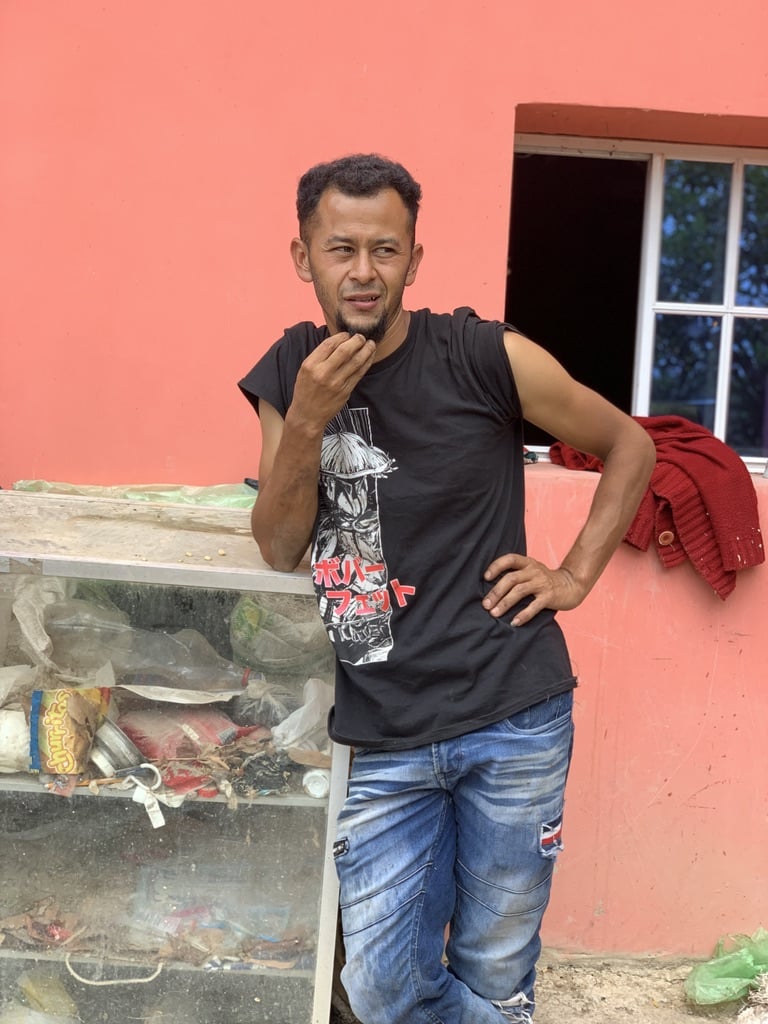
Nelson's family has three farms located In the beautiful Caballeros community nestled in La Palma, Chalatenango, surrounded by a dense pine forest and clouds
For the past 15 years, Nelson has been involved in coffee, first supporting his mother, and now running his farm. 7 years ago, he started focusing on specialty coffees when he and his mother saw that by selling quality coffee, they could improve their incomes. Early on, their coffees started in the AA quality range, Now they are producing some stellar AAA and Microlots. Their total production is now sold as specialty coffee to Caravela Coffee, one of the importers we work with.
He tells how his main motivation to work in coffee has been his family. Nelson recalls, “We had a small plot of land, we planted grains, mostly corn and beans – that’s how we started to work the land years ago. And where Finca Las Mercedes is now, which is my farm, it was a pasture area for grazing cattle. Today it’s a renovated area with trees and coffee. Today, I feel more economically supported thanks to coffee cultivation; this allows me to improve my family’s quality of life and progress.”
On their farm, Nelson and Elsy grow different varieties as follows: 50% Pacamara, 30% Bourbon, and 20% Catuai varieties. Nelson oversees the farm’s agronomic and administrative management, his wife Elsy helps him with processing and drying, and they hire pickers during the harvest peak and for specific activities during the off-season months.
To produce quality coffees, Nelson comments, “We start with selective harvesting, only picking cherries at their optimum point of ripeness. Due to the distance and lack of access roads, the harvested coffee cherries are left to rest for approximately 15 hours in clean bags on the farm. The next morning the coffee is pulped, and then the wet parchment coffee with all the mucilage is transferred to clean bags and sacks, to be transported on horses a few kilometers down the hill, where a pick-up waits to transport the coffee to the fermentation piles.” Therefore, fermentation occurs in two phases, first in cherry for 15 hours, and after being pulped for 24 hours more. Once this process is completed, this coffee is washed and transferred to raised beds, where 100% of the coffee dries for an average of 15 days.
Nelson and his family focus primarily on washed coffees but are starting to produce honeyed and natural coffees as well. They are doing this in small quantities to make sure they can maintain quality. All relationships are unique in how they begin and how they develop. We are hopeful that Nelson and Elsy will continue to find success in coffee production and that we can become partners with them in sharing their beautiful coffee for years to come. Time will tell.


